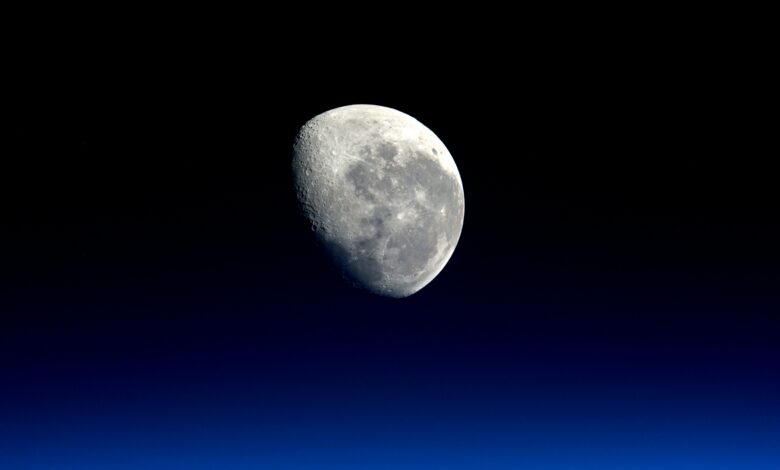
Asteroid 2024 PT5: Earth’s Temporary Second Moon:
Introduction:
In an event that has captured the attention of scientists and space enthusiasts alike, Asteroid 2024 PT5 is poised to become a temporary satellite of Earth for two months. This rare occurrence, where an asteroid momentarily adopts a quasi-satellite orbit, offers a unique opportunity to study the dynamics of celestial bodies and provides a thrilling cosmic spectacle. Unlike our permanent Moon, which has been a steadfast companion for billions of years, 2024 PT5 will only stick around for a limited period before continuing its journey through space. Nevertheless, its visit could yield important insights into orbital mechanics, asteroid composition, and more.
This article explores what we know about Asteroid 2024 PT5, its characteristics, the dynamics of its orbit, its implications for Earth, and the broader significance of such an event in both scientific and cultural contexts.
Discovery and Characteristics of Asteroid 2024 PT5:
Asteroid 2024 PT5 was discovered by a team of astronomers using high-powered telescopes from the Pan-STARRS (Panoramic Survey Telescope and Rapid Response System) observatory in Hawaii in August 2024. Initially cataloged as a near-Earth object (NEO), the asteroid’s orbit was quickly determined to be peculiar due to its close approach to Earth and its ability to get temporarily “captured” by Earth’s gravitational influence.
Measuring approximately 50 meters in diameter, 2024 PT5 is classified as a small asteroid. Its size and irregular shape make it unlikely to pose a threat to Earth even if it were to collide, though such an event is not expected. Instead, it is more likely to burn up in the atmosphere or disintegrate into smaller fragments.
One of the key reasons for the fascination with 2024 PT5 is its highly unusual orbital path. Unlike most asteroids that pass by Earth in predictable flybys, this one will follow a path that brings it into a temporary orbit around Earth. This type of orbit is known as a “quasi-satellite” orbit, where an object remains gravitationally bound to a planet for a limited time before being ejected back into space.
How Asteroids Become Temporary Moons:
Asteroids occasionally get captured by Earth’s gravity and enter into temporary orbits. These events are rare, but they are not unheard of. The phenomenon occurs when an asteroid’s orbit brings it close enough to Earth, and its velocity slows down relative to Earth. Earth’s gravitational pull can then temporarily trap the asteroid, causing it to orbit the planet for a brief period.
The duration of such an orbit depends on several factors, including the asteroid’s speed, distance from Earth, and interactions with the Moon and other gravitational influences. In the case of 2024 PT5, astronomers estimate that it will orbit Earth for about two months before gaining enough momentum to escape back into space.
This isn’t the first time an asteroid has become a temporary satellite of Earth. In 2006, an asteroid named RH120 was captured by Earth’s gravity for several months, and in 2020, another small asteroid, 2020 CD3, orbited Earth for a short time before escaping. These events, however, are typically brief and often go unnoticed by the general public due to the small size of the objects involved.
Orbital Dynamics: Why 2024 PT5 Will Orbit Earth:
Asteroid 2024 PT5’s trajectory is the result of a delicate balance between its speed, distance, and gravitational forces exerted by both Earth and the Moon. As it approaches Earth, it enters into what is known as a weak stability region, where the gravitational forces of Earth and the Sun allow for temporary orbital capture. This region is effectively a “zone” where an object is just close enough to be pulled into an orbit, but not so fast that it escapes immediately.
Initially, 2024 PT5 will orbit Earth at a distance of about 300,000 kilometers, which places it slightly closer than the Moon’s average distance of 384,000 kilometers. Over time, its orbit will gradually shift, varying between 150,000 kilometers and 400,000 kilometers from Earth. This variation in distance is due to the irregularity of its orbit and the gravitational influences it will encounter from both Earth and the Moon.
Unlike our Moon, which maintains a stable, elliptical orbit, 2024 PT5’s orbit will be more erratic. It will not have a uniform path around Earth but will instead wobble slightly due to perturbations from Earth’s gravity, as well as the gravitational interactions with the Moon.
What to Expect During the Two-Month Orbit:
The presence of a second moon, even temporarily, will undoubtedly be a fascinating phenomenon for observers on Earth. While 2024 PT5 is far too small to be seen with the naked eye, amateur astronomers with telescopes should be able to track its motion across the sky. The asteroid will appear as a small, fast-moving point of light, shifting its position noticeably from night to night.
Astronomers are particularly excited about this event because it provides a chance to study the behavior of a natural satellite that is significantly smaller than our Moon. By closely monitoring 2024 PT5, scientists hope to learn more about how such objects interact with Earth’s gravity and how their orbits evolve over time. This could help refine models of asteroid behavior and potentially improve our ability to predict future near-Earth object (NEO) encounters.
One of the key scientific objectives will be to measure the Yarkovsky effect on 2024 PT5. This is a phenomenon where an asteroid’s orbit can be altered by the way it absorbs and radiates heat. Given the relatively small size of 2024 PT5, the Yarkovsky effect could play a significant role in its orbital dynamics, and observing it could help scientists better understand how this force influences other small bodies in space.
Asteroid 2024 PT5: Potential Impacts and Hazards:
While the idea of a second moon may conjure images of celestial wonder, some may wonder whether 2024 PT5 poses any danger to Earth. The good news is that 2024 PT5’s orbit is not expected to intersect with Earth’s atmosphere during its stay. The asteroid will remain at a safe distance throughout its two-month orbit, and there is no risk of collision.
Even if 2024 PT5 were to collide with Earth, its relatively small size (about 50 meters across) would likely result in minimal damage. The asteroid would burn up in the atmosphere before reaching the surface, similar to the 2013 Chelyabinsk meteor, which exploded over Russia and caused minor damage to the ground. Nevertheless, astronomers are keeping a close watch on its trajectory to ensure that there are no unexpected changes in its orbit.
The Significance of Temporary Moons in Astronomy:
The phenomenon of temporary moons, or quasi-satellites, has important implications for astronomy. Events like the capture of 2024 PT5 provide valuable opportunities to study objects that come close to Earth and to better understand the gravitational dynamics of our planet’s interaction with near-Earth objects.
In addition to the scientific significance, the public fascination with such events can help increase awareness about space exploration and the study of asteroids. The notion of a temporary second moon invites curiosity and wonder, reminding us of the vast and dynamic nature of the cosmos.
Quasi-satellites like 2024 PT5 may also offer a glimpse into the past. It is possible that Earth had other temporary moons in the distant past, but their brief visits would have left little trace. Studying these events today could help scientists speculate about the frequency and nature of such occurrences throughout Earth’s history.
Cultural and Symbolic Impacts of a Second Moon:
The concept of a second moon has long captured the human imagination. From science fiction stories to mythological tales, the idea of multiple moons orbiting a planet is often associated with mystical or apocalyptic themes. While 2024 PT5 will not be visible to the naked eye, its presence will likely spark renewed interest in these cultural narratives.
In literature and film, moons are frequently portrayed as symbols of enigma, change, and the cycles of time. The arrival of a second moon could reignite creative interpretations of celestial phenomena in art and storytelling. It may even lead to new works of fiction inspired by the idea of multiple moons or the strange, fleeting nature of celestial visitors.
Conclusion:
Asteroid 2024 PT5’s temporary orbit around Earth as a quasi-satellite is a rare and fascinating event. For two months, this small asteroid will act as a second moon, providing a unique opportunity for scientific study and capturing the imagination of people around the world. While it poses no threat to Earth, its presence offers an invaluable chance to deepen our understanding of the dynamic relationships between planets, asteroids, and gravitational forces.
As we continue to explore and observe the cosmos, events like this remind us of the ever-changing nature of space and the surprises it holds. For now, we can look forward to watching 2024 PT5’s journey around our planet and pondering the mysteries of our celestial neighborhood.